Austin TX
Why Bathtub Mold Keeps Coming Back

It's one of the most common and frustrating problems for homeowners: you scrub the black or pink bathtub mold from your caulk and grout, and for a few weeks it looks fine. Then the dark spots come back. Mold is not only an eyesore — it also affects your health and damages your bathroom over time. Knowing why it returns is the key to removing it for good.

What Causes Bathtub Mold?
Mold thrives in damp, humid spaces, which makes a bathroom a prime target. The causes are simple:
- Humidity and poor ventilation. Showers generate steam. Without a working fan or an open window, that moisture stays and creates ideal conditions for mold.
- Soap scum and body oils. Mold doesn't only need water; it feeds on the residue left on the tub surface.
- Leaky fixtures. A dripping faucet or showerhead gives mold the constant water supply it needs.
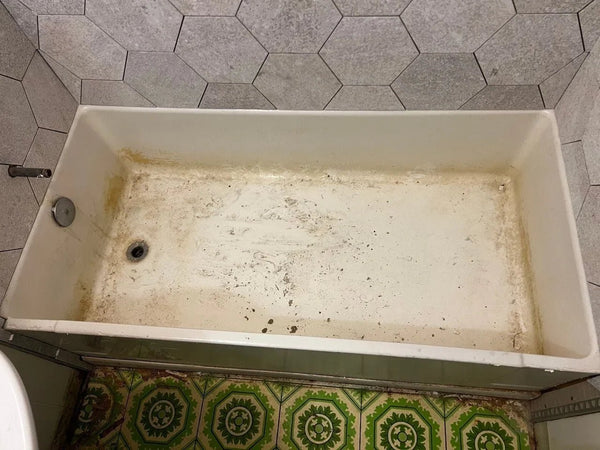
- Cracks and crevices. This is the big one. Mold hides in porous surfaces: old grout, cracked caulk, and fine scratches in an aging acrylic or fiberglass tub.
Scrubbing removes what you can see on the surface. It doesn't reach the spores living inside those pores and hairline cracks, which is why the stains return.
Why Refinishing Removes Mold's Habitat

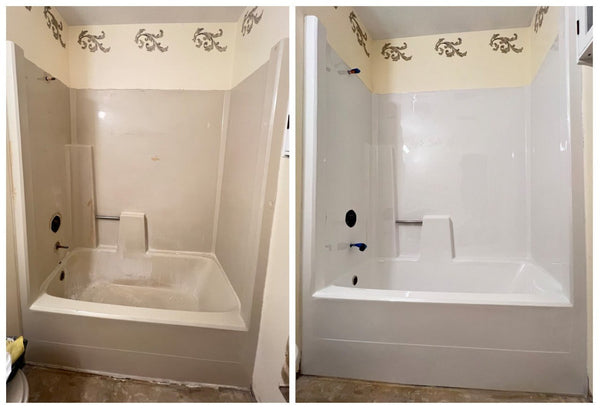
To stop mold coming back, you have to remove the porous surfaces where it hides. That's what our refinishing service does, using a thick pour-on coating instead of spray:
- It fills cracks and crevices. The coating flows into the fine cracks and damaged areas where spores survive.
- It creates a new, non-porous surface. Once cured, it forms a hard, seamless shell over the whole tub.
- It leaves nowhere to hide. A smooth, high-gloss, non-porous surface has no pores or grout lines for spores to settle into. We repair serious damage first, so the new surface goes on sound material rather than over a problem. See fiberglass tub repair if your tub also has cracks or soft spots.
How to Keep the Bathroom Mold-Free
Once the tub is refinished, prevention gets easier, because there's no porous surface left to clean out.
- Improve ventilation. Run the fan during the shower and for 30 minutes after.
- Fix leaks quickly. A dripping faucet keeps the area wet around the clock.
- Wipe surfaces down. A squeegee or towel after showering takes seconds on a smooth surface.
- Clean weekly. A gentle, non-abrasive cleaner such as dish soap or Scrubbing Bubbles is enough to remove soap scum.
Health Risks of Bathroom Mold
Mold isn't only unsightly. According to the CDC, exposure can cause:
- Allergic reactions: sneezing, runny nose, red eyes, skin rash.
- Respiratory problems: mold spores can trigger asthma attacks and cause coughing or irritation in people without asthma.
- Infections: in rare cases, people with weakened immune systems are at higher risk of fungal infection.
Bathtub Mold FAQ
Why does bathtub mold keep coming back after cleaning?
Because the spores live inside porous caulk, grout, and cracks, surface cleaners don't reach them, so the colony regrows within a few weeks.
Does bleach kill bathroom mold?
Bleach removes the stain on non-porous surfaces, but on porous grout and caulk it often leaves the roots behind, so the mold returns.
Can a moldy tub be refinished?
Yes. We clean and treat the surface first, repair any damage, and then apply a new coating that seals the old surface underneath.
Does the process smell?
No. We use an odorless, Zero-VOC pour-on coating, so you can stay home while we work. See our safety and EPA standards.
Do you serve my area?
We cover Austin, Round Rock, Cedar Park, and the surrounding suburbs.
Stop Scrubbing, Start Refinishing
Cleaning and ventilation help, but if the tub surface is old, porous,s or cracked, mold keeps its home. Refinishing takes that home away.
Ready to fix it for good? Get a free quote from Fix Tub Fast.