Austin TX
How to Remove Yellow Water Stains from a Bathtub

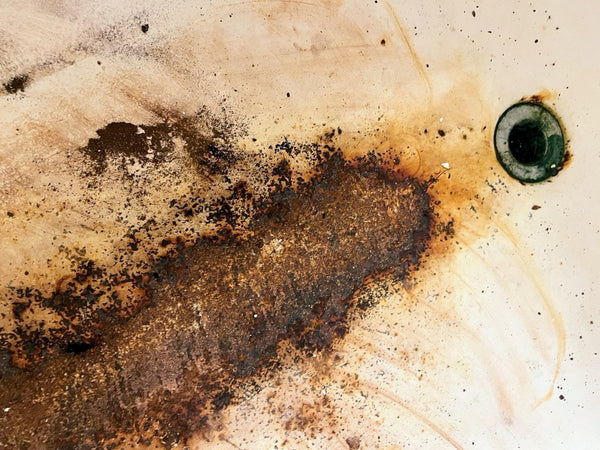
Yellow water stains in a bathtub are frustrating: the bathroom looks dirty even right after you clean it. They come from hard water, which carries iron and other minerals that settle on the surface over time.
Cleaning them doesn't require bleach. Many people avoid it because of the smell and the fumes, and natural methods handle most hard water stains just as well.
This guide covers what works, when to reach for a commercial cleaner, and what to do when the stains won't come out.
What Causes Yellow Water Stains in a Bathtub?
Three things usually combine:
- Hard water minerals. Iron and manganese leave a yellow-brown film as water evaporates.
- Soap scum. Soap reacts with minerals and forms a sticky layer that traps more.
- Bath oils and products. Oils leave residue that darkens as it builds up.
Central Texas has notably hard water, so tubs here stain faster than in soft-water areas. Knowing the source helps you pick the right approach.

What You Need (No Bleach Required)
- White vinegar — dissolves mineral deposits
- Baking soda — gentle abrasive
- Lemon juice — mild acid for spot treatment
- Hydrogen peroxide — for stubborn stains
- Cream of tartar — thickens peroxide into a paste
- Non-abrasive sponge — never steel wool or scouring pads
Important: never mix bleach with vinegar, peroxide, or ammonia. The combination releases toxic gas. If you've already used bleach, rinse thoroughly before trying anything else.

How to Remove Yellow Water Stains Step by Step
Step 1: Rinse the tub
Rinse with warm water to loosen surface dirt so the cleaner reaches the stain itself.
Step 2: Apply vinegar and baking soda
Sprinkle baking soda over the stained area, then spray white vinegar on top. It will foam. Let it sit for at least 20 minutes.
Step 3: Scrub gently
Work the paste with a non-abrasive sponge, rinsing often to see your progress. Don't press hard: scratches make the next stain worse, because dirt settles into them.
Step 4: Spot-treat with lemon juice
For stubborn patches, apply lemon juice directly, leave it for 15 minutes, then scrub again.
Step 5: Peroxide paste for the worst spots
Mix hydrogen peroxide with cream of tartar into a thick paste. Apply it to the stain, leave it for 10 minutes, then scrub gently and rinse.
Step 6: Rinse everything off
Rinse the whole tub with clean water to remove any residue, then dry it with a towel.

A Word of Caution by Tub Type
- Acrylic and fiberglass: no abrasive powders or pads. They dull the gloss and leave micro-scratches. See fiberglass tub repair if yours is already scratched.
- Porcelain and cast iron: more forgiving, but chipped enamel keeps staining at the chip. That's a case for chip-and-crack repair.
- Refinished tubs: skip vinegar, lemon juice, and peroxide. Acids attack the coating. Use dish soap or a non-abrasive spray.
Using Commercial Cleaners Safely
If natural methods don't cut it, a commercial cleaner can. Read the label first, and test it on a small hidden area to confirm it won't harm the finish.
- Wear gloves to protect your skin.
- Ventilate the room so you're not breathing fumes.
- Follow the recommended dwell time — leaving it longer doesn't clean better; it damages the surface.
Rinse thoroughly afterward so no residue remains.

How to Prevent Yellow Water Stains
- Wipe the tub down after use. A squeegee or towel takes seconds and stops minerals from settling.
- Consider a water softener if your water is very hard. It helps the whole house, not just the tub.
- Ventilate. Run the fan during and after showers.
- Clean weekly with a gentle cleaner so deposits never build up.

When Cleaning Stops Working
If the stains return within days, or the surface feels rough and chalky no matter how hard you scrub, the finish itself is worn through. Minerals then settle into exposed pores, and no cleaner will reach them.
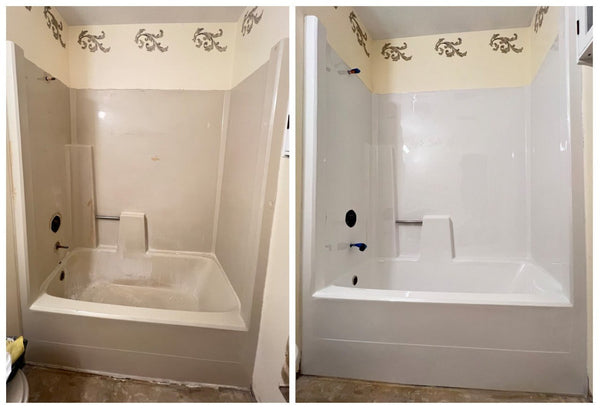
At that point,t the options are replacing the tub or refinishing it. Refinishing puts a new, smooth, non-porous surface over the old one, usually in a few hours and at a fraction of replacement cost. The same applies to a stained sink.
Yellow Water Stains FAQ
What causes yellow water stains in a bathtub?
Mostly iron and other minerals in hard water, combined with soap scum that holds them on the surface.
Can I use bleach on bathtub stains?
Bleach whitens the stain but doesn't remove mineral deposits, and it can dull acrylic and refinished surfaces. Vinegar and baking soda work better on hard water marks.
Will vinegar damage my tub?
On porcelain, acrylic, and fiberglass, occasional use is fine. On a refinished tub, avoid it: acids attack the coating.
How often should I clean the tub?
Once a week is enough to stop deposits forming, plus a quick wipe after each use.
Why do the stains keep coming back?
Either the water is very hard, or the surface is worn and porous, so the stain sits below the level a cleaner can reach.
When a Clean Tub Isn't Enough
Most yellow water stains come off with vinegar, baking soda, and a little patience, and regular wiping keeps them away. Once the finish is worn, though, cleaning stops helping.
Does your tub still look stained after a deep clean? Get a free quote from Fix Tub Fast — Austin, Round Rock, and nearby.